
Menu
Menu
En cours
A Venir
Billetterie
Collections en ligne
Actualités
Boutique
Restaurants et privatisation
L’Empire du sommeil at the Musée Marmottan Monet
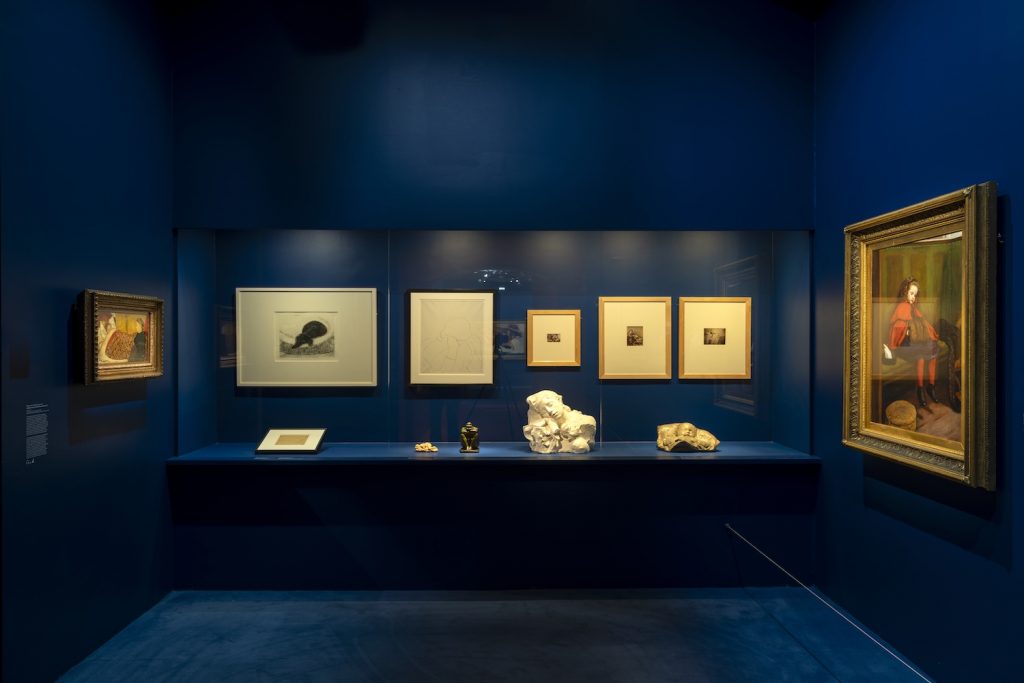
“Sleep occupies one third of our existence” writes Érik Desmazières, Director of the Musée Marmottan Monet, in the foreword to the exhibition catalogue L’Empire du sommeil. Whether peaceful or troubled, the act of sleeping belongs to a universal experience that is both intimate and shared—one that spans centuries and has left a lasting imprint on artistic creation. Yet, as Desmazières notes, it is striking that no exhibition in France has until now been devoted to this theme, at least within the field of artistic representation.
It is precisely this gap that the Musée Marmottan Monet sets out to explore with L’Empire du sommeil. Conceived by Laura Bossi, neurologist and historian of science, in co-curatorship with Sylvie Carlier, Director of Collections at the museum, the exhibition offers a fresh perspective on sleep and on the diversity of its artistic manifestations. It reveals the ambiguity of a state that is at once shared and enigmatic, situated at the crossroads of body, mind, and imagination.
In this spirit, The Empire of Sleep brings together a corpus of nearly 130 works, primarily dating from the ‘long nineteenth century,’ from the Enlightenment to the First World War. Drawn from a range of national and international institutions as well as private collections, these works attest to the richness and persistence of sleep as a motif in the history of art.
Among them is the small-scale version of La Nuit – movable base (1902) by Aristide Maillol, loaned by the Fondation Dina Vierny – Musée Maillol. Its presence within the exhibition invites closer attention.
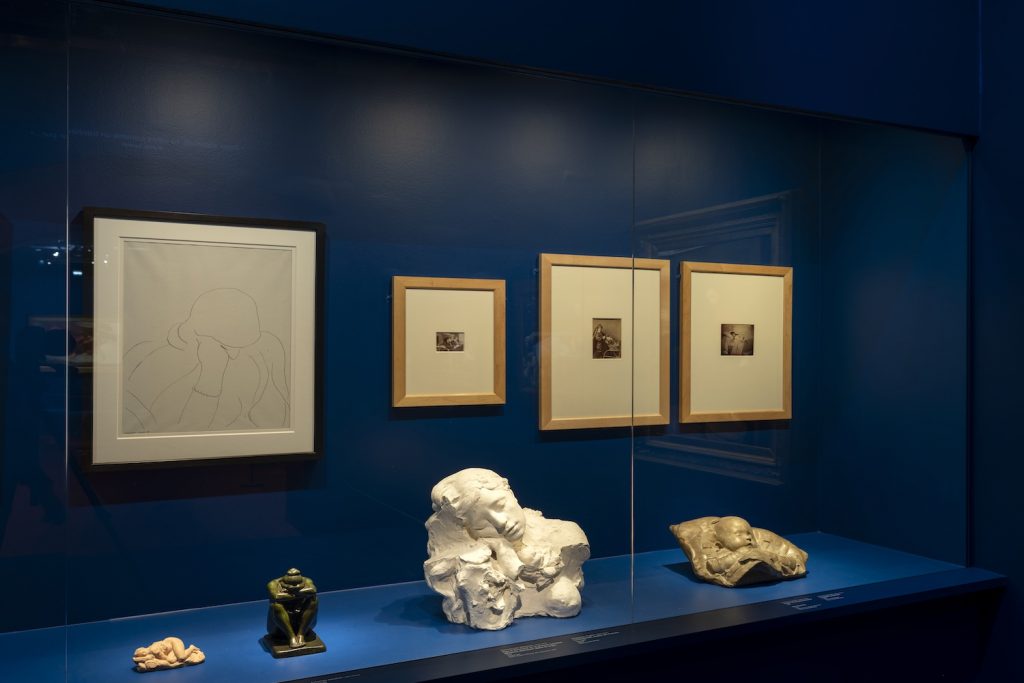
Presented in the first section of the exhibition, entitled “Doux sommeil, bonheur pur…” – Gentle sleep, pure happiness… –, Maillol’s bronze statuette La Nuit is shown alongside Femme endormie (1876) by Jean-Baptiste Carpeaux and Sommeil, buste de femme (1889) by Auguste Rodin. This dialogue highlights different sculptural approaches to repose, ranging from the expressive modelling of the late nineteenth century to Maillol’s pursuit of a more condensed, introspective form.
Created in 1902, the statuette corresponds to a study developed prior to the monumental version of La Nuit (1909), presented at the Salon d’Automne of 1909. It belongs to a pivotal period in Maillol’s career, marked by the sustained development of the theme of the seated woman, for which he often took his wife, Clotilde Narcis, as his model. First explored through drawing, this motif quickly found sculptural expression, notably in Méditerranée (1905), exhibited at the Salon d’Automne of 1905.
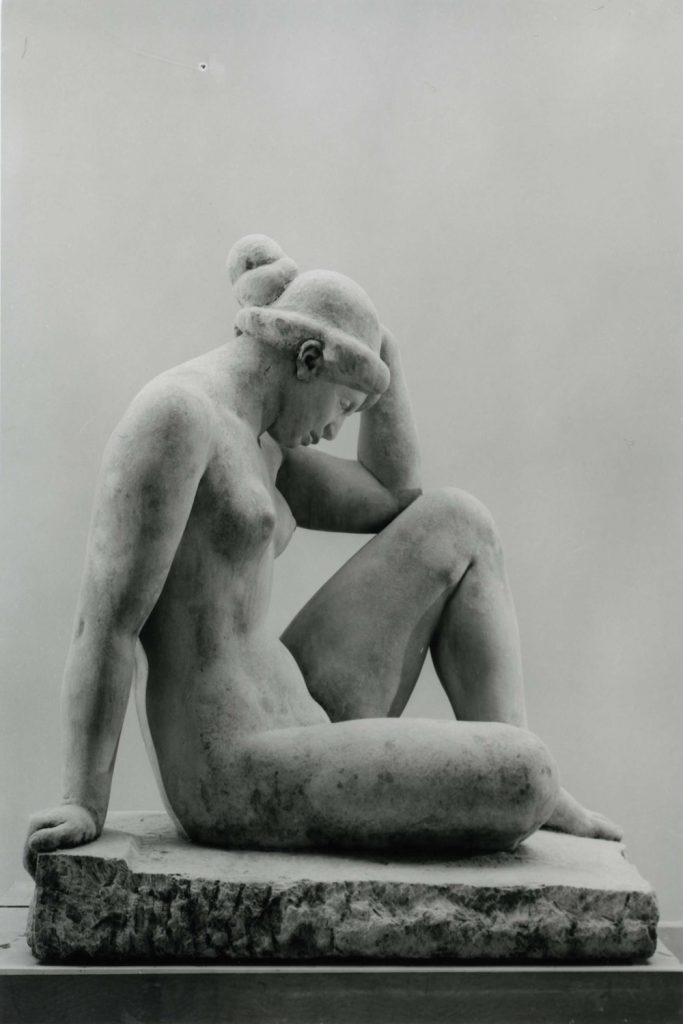
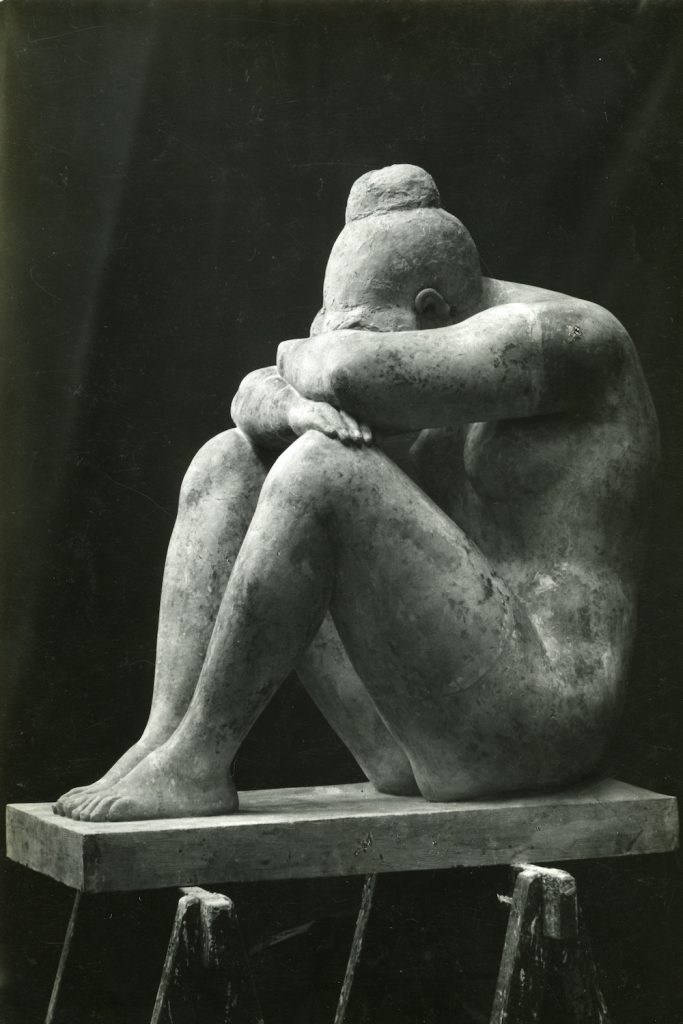
Like Mediterranean, La Nuit is structured around an almost cubic volume, though in a more compact and concentrated form. The body, folded in on itself, the face buried between arms resting on raised knees, evokes a posture of rest and withdrawal, marked by deep interiority. The composition emphasizes the solidity of the torso and thighs, while subtle openings—between the bust and the legs, and between the calves and the backs of the thighs—introduce delicate intervals of breathing within this dense mass.
Through this balance between fullness and void, Maillol asserts a conception of sculpture grounded in stability and the permanence of form, in contrast to the statuary of his time, which was largely oriented toward movement and dynamic modelling. Nourished by the study of ancient and Egyptian sculpture, this search for an architectural harmony of the body lends La Nuit a silent, timeless power. Rodin himself, upon discovering the work at the Salon d’Automne of 1909, praised this approach in a remark that has since become famous: “We too often forget that the human body is an architecture, but a living one.”
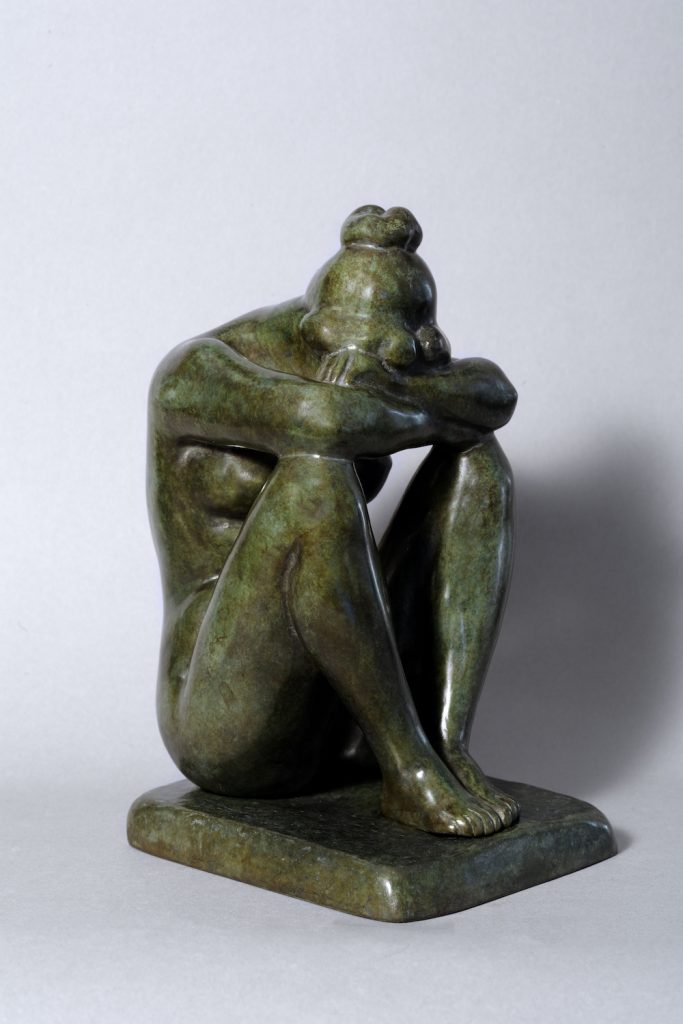
Presented within the exhibition itinerary of The Empire of Sleep, the statuette La Nuit occupies a singular place, offering an interpretation of sleep founded on withdrawal, concentration, and the fullness of form, while shedding light on the genesis of the monumental version of the work.