
Menu
Menu
En cours
A Venir
Billetterie
Collections en ligne
Actualités
Boutique
Restaurants et privatisation
In 2026, the galleries Leandro Navarro in Madrid, Artur Ramon in Barcelona, and Dina Vierny present the travelling exhibition Maillol – Manolo. Pure Sculpture, accompanied by a publication. The exhibition explores the artistic dialogue between Aristide Maillol and Manolo Hugué, two sculptors connected not only by their Catalan origins, but also by a shared pursuit of formal purity—at the intersection of classical heritage, Mediterranean light, and modernity.
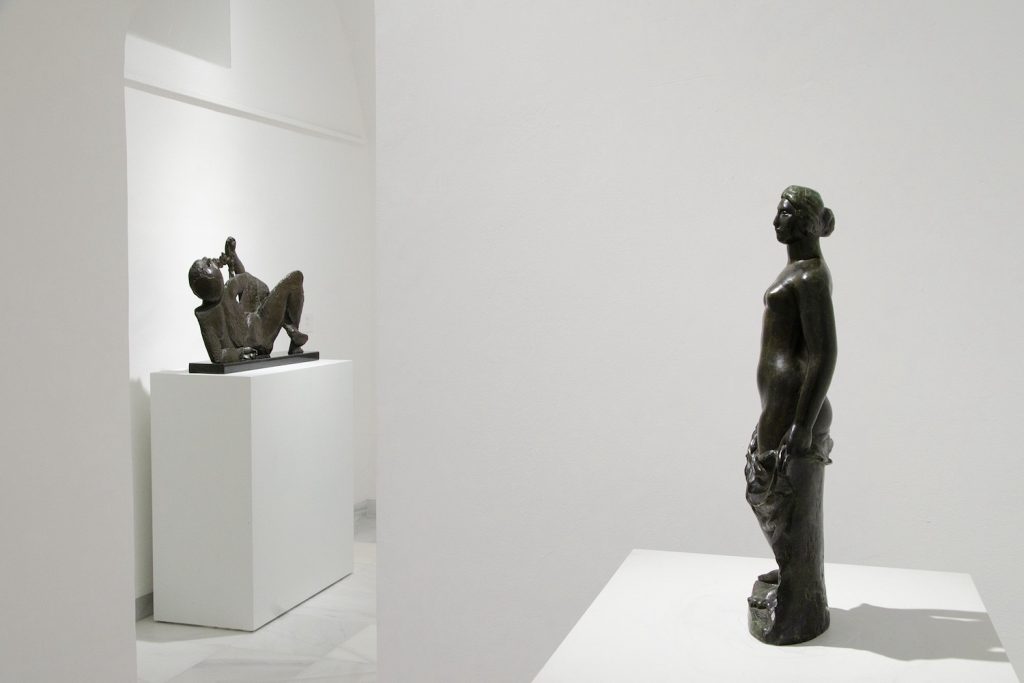
Maillol – Manolo. A Shared Trajectory
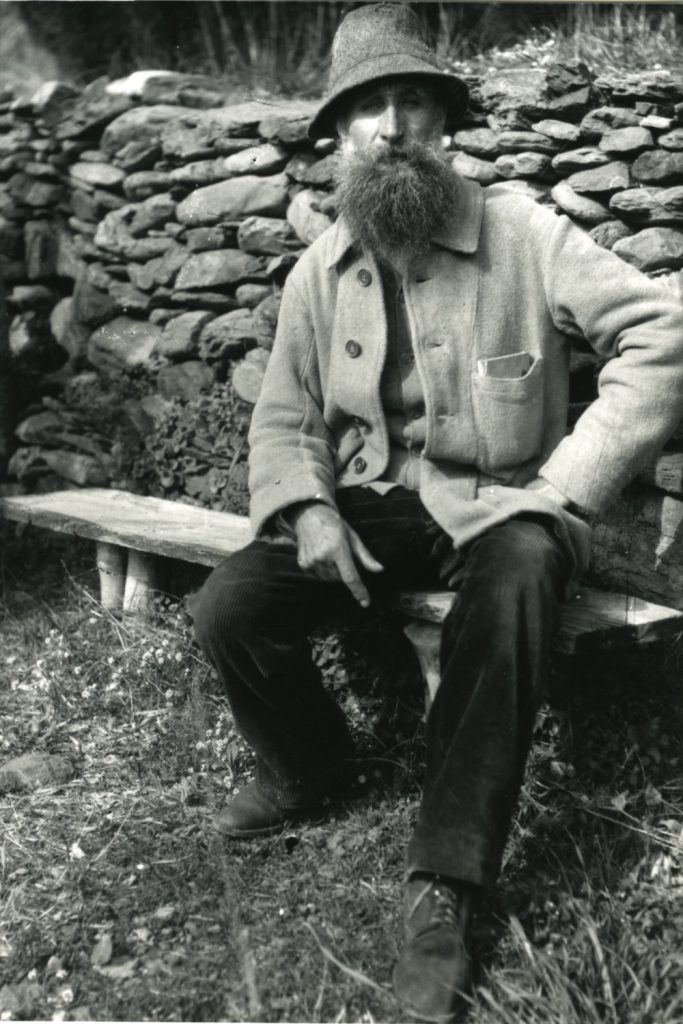
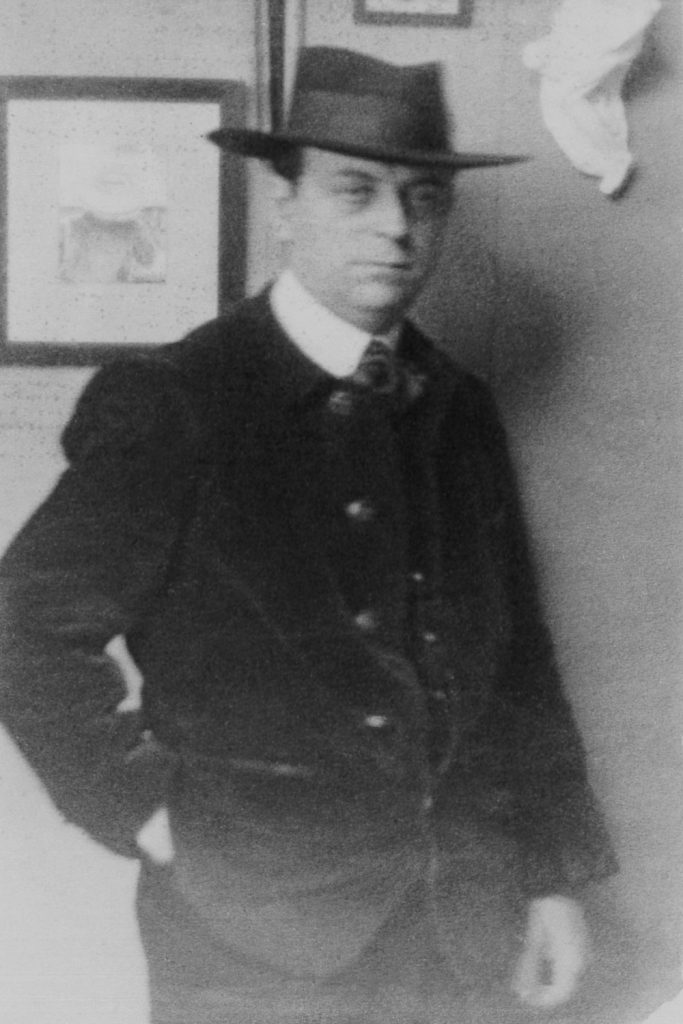
« With what emotion must I have crossed, two years after his death, the threshold of the house in Banyuls, and sat again at the table where, so many times, Matisse and Marquet, Gimond and Manolo had gathered »
Pierre Camo, Maillol mon ami, 1950
The first encounter between Aristide Maillol (1861–1944) and Manolo Hugué (1872–1945) may have taken place in Paris at the turn of the century, when the French capital had established itself as a major centre of artistic creation. Their relationship was consolidated more decisively during the First World War, when both artists settled in the Pyrénées-Orientales: Maillol in Banyuls-sur-Mer, Manolo in Céret, two towns scarcely forty kilometres apart.
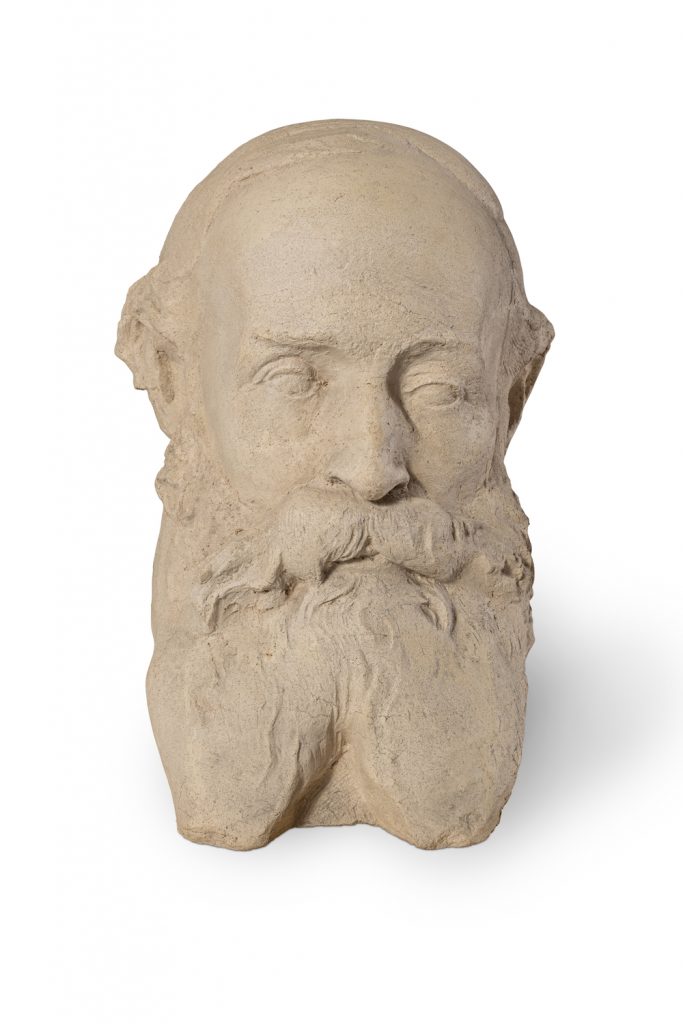
Eleven years older, Maillol exerted a formative influence on his younger colleague. This influence was tempered by deep admiration, as evidenced by the portraits Manolo devoted to the master. Among these works is the white terracotta sculpture presented in the Barcelona venue of the exhibition, which offers an idealised image of Maillol, here portrayed in the guise of a classical philosopher.
While this personal relationship played a crucial role in shaping their artistic dialogue, it was also part of a broader network of affinities. Both artists emerged from Catalan culture – one French, the other Spanish -and were largely self-taught, arriving at sculpture through other disciplines: Maillol through painting, Manolo through jewellery. Together, they embody a classical current within the early twentieth-century avant-garde, grounded in the pursuit of an essential, purified form of sculpture, stripped of rhetoric and narrative excess.
The female nude occupies a pivotal position in the work of both sculptors, although their approaches differ significantly. In Maillol’s work, the figure appears ample and sensual, assuming an almost erotic dimension; in Manolo’s, restrained and austere, characterised by a primitive simplicity. From these convergences and contrasts emerges a productive dialogue that underpins the exhibition itself.
Maillol – Manolo. A Sculpted Dialogue
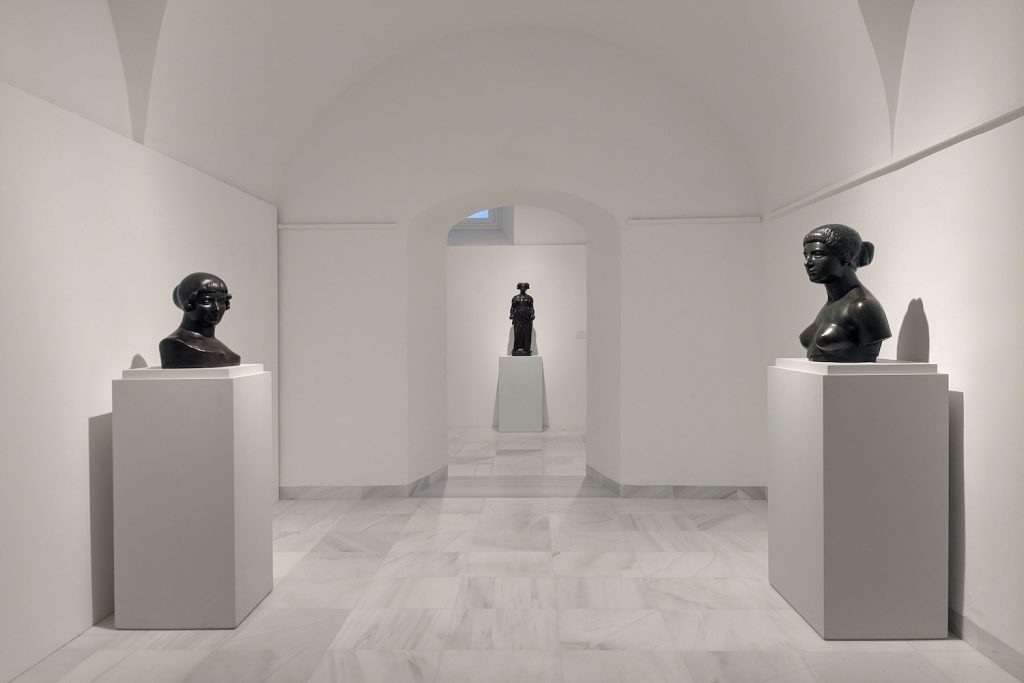
The exhibition places sculpture at its core, bringing together a selection of fifteen works by each artist, complemented by a smaller group of drawings. These works on paper never constitute an autonomous corpus; instead, they accompany the sculptures as preparatory studies, formal variations, or extensions of sculptural thinking, underscoring the central role of drawing in both artists’ creative processes.
The exhibition juxtaposes works that engaged in particularly close formal dialogue. Certain pieces respond to one another with striking precision, revealing strong affinities in their treatment of volumes and postures. This is notably the case with Maillol’s terracotta relief Les Porteuses d’eau (1898) and Manolo’s Deux femmes (1924), which seem to have been conceived in direct dialogue.
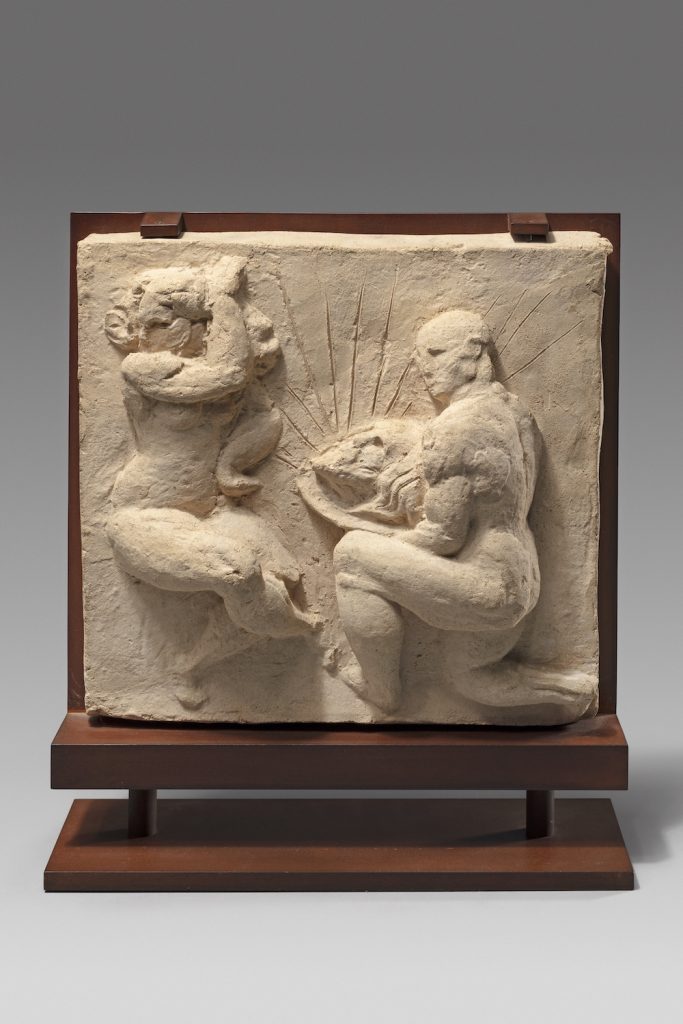
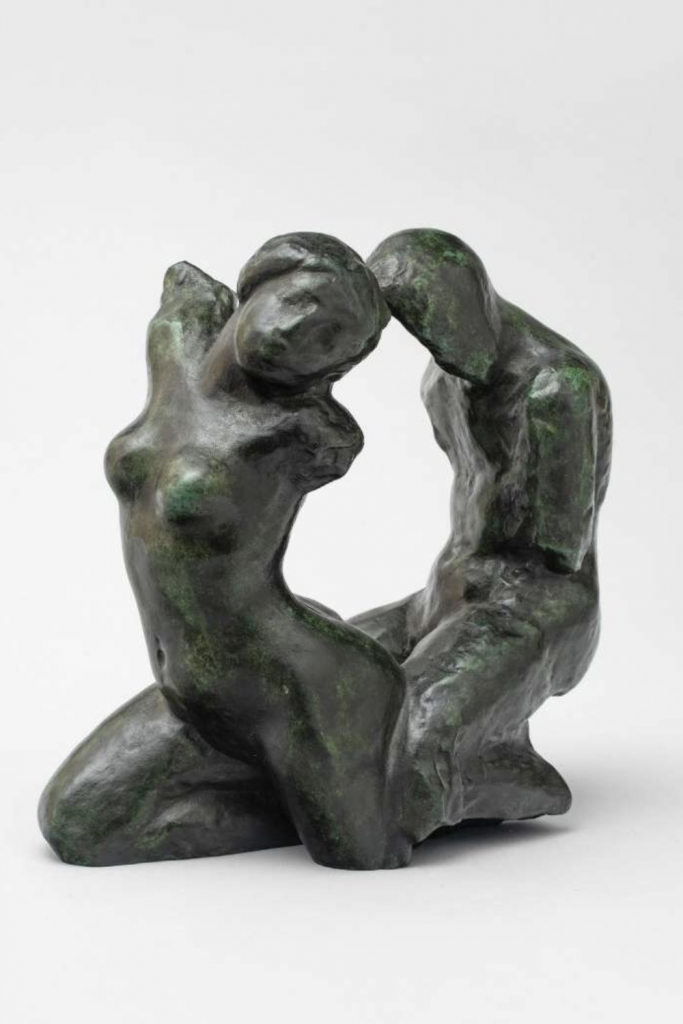
Elsewhere, the correspondences are looser yet equally resonant, revealing thematic and expressive resonances centered on the human body, movement, and the relationship between figures. This is exemplified by the dialogue established between Manolo’s Dance de Salomé (terracotta relief, 1927–1928) and Maillol’s Le Couple (bronze, 1896). While both works articulate tension between bodies through dance, they offer profoundly different interpretations: in Maillol’s work, movement suggests a relationship imbued with intimacy and sensuality; in Manolo’s, the female figure becomes the vehicle for a narrative charged with symbolic violence and tragedy.
The works presented come from several collections, with a major role played by Galería Artur Ramon Art, which has conserved and promoted the work of Manolo Hugué for many years, and by Galerie Dina Vierny which, alongside the Fondation Dina Vierny – Musée Maillol, safeguards the legacy of Aristide Maillol. After its presentation in Madrid, the exhibition will travel to Barcelona, at Galería Artur Ramon Art, before concluding at Galerie Dina Vierny in Paris.