Menu
Menu
En cours
A Venir
Billetterie
Collections en ligne
Actualités
Boutique
Restaurants et privatisation
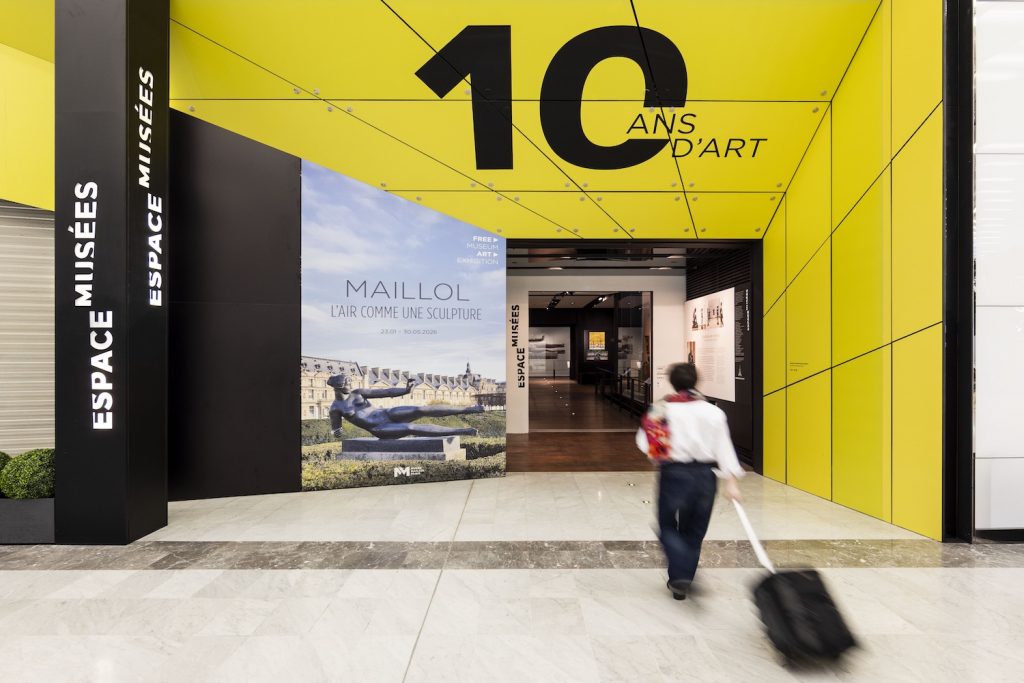
Since its opening in 2012, the Espace Musées at Paris–Charles de Gaulle Airport has each year highlighted a major Parisian cultural institution. In 2026, the Fondation Dina Vierny – Musée Maillol presents the exhibition Maillol. L’Air comme une sculpture.
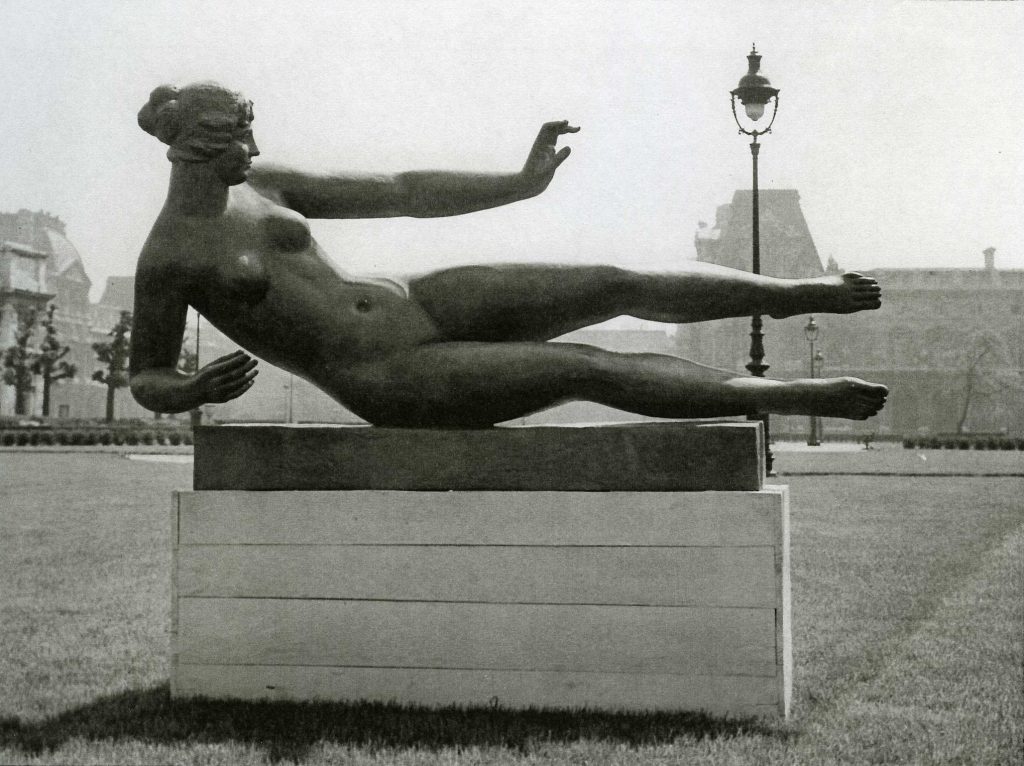
Curated by Antoinette Le Normand-Romain — former director of the Institut national d’histoire de l’art (INHA) and a specialist in sculpture — the exhibition explores the genesis and transformations of one of Maillol’s major monumental works: L’Air (1938).
From March 17 to June 29, the exhibition extends beyond the gallery space with the installation of a resin version of Air on the LISA shuttle platform in Hall K of Terminal 2E.
Tracing the Path to L’Air
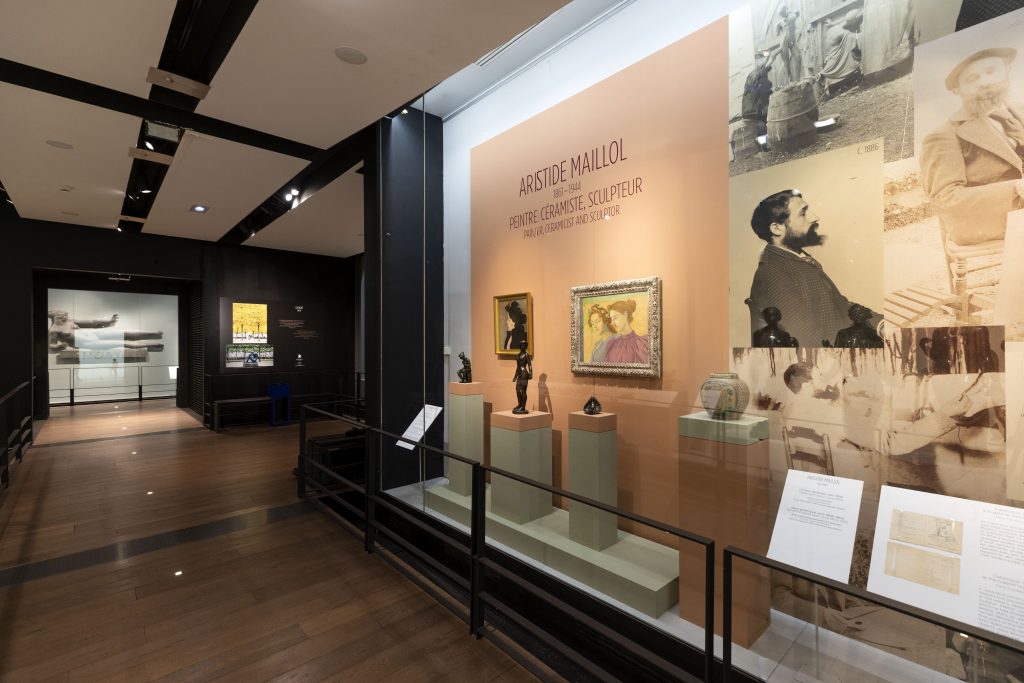
The decision to devote this exhibition to L’Air in the context of Paris–Charles de Gaulle Airport is no coincidence. Conceived in 1938 as a tribute to the aviators of the Aéropostale, the work naturally resonates with a place dedicated to travel and movement.
The exhibition, however, goes beyond this simple symbolic echo: it traces the genesis of the sculpture while situating it within the major stages of Maillol’s artistic development.
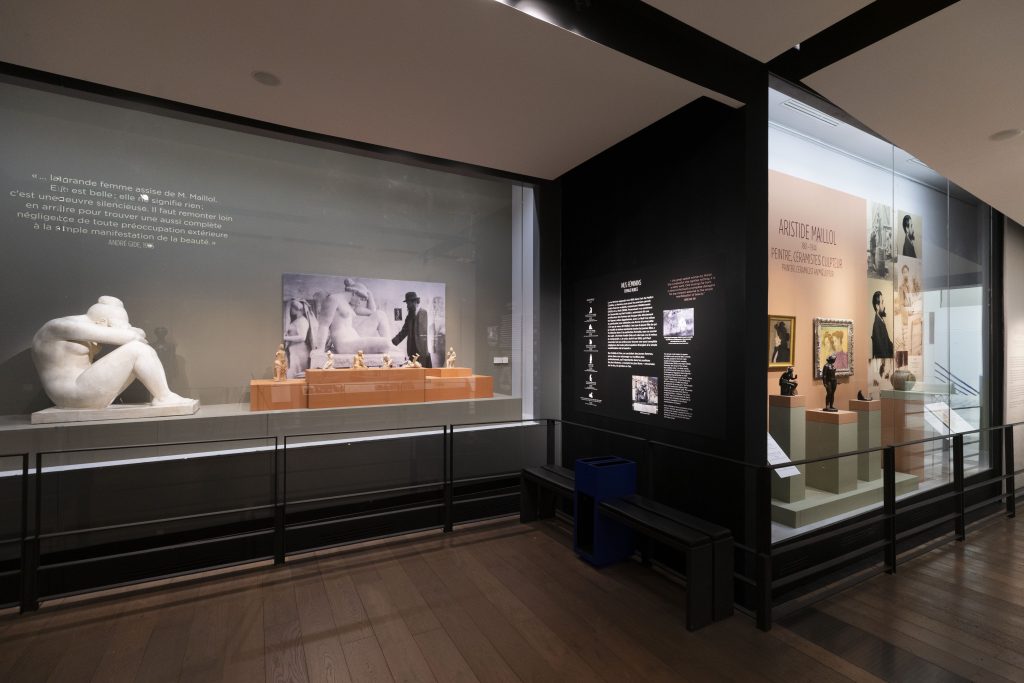
The exhibition opens with the artist’s early years, evoking his engagement with painting and the decorative arts before his decisive turn toward sculpture. The next section presents works devoted to the female nude—a central subject through which Maillol gradually developed a visual language based on the balance of forms and the simplification of volumes.
Attention then shifts to his monumental production, notably the Monument à Cézanne, a work that served as the formal matrix for L’Air. From this sculpture, through a series of successive transformations, Maillol developed the figure intended for the monument to the aviators, which ultimately culminated in L’Air.
The exhibition thus converges on this sculpture, presented through the different stages of its development, before being placed in dialogue with Air by Étienne Le Hongre (1628-1690), , created for the gardens of Versailles as part of the series Quatre Éléments.
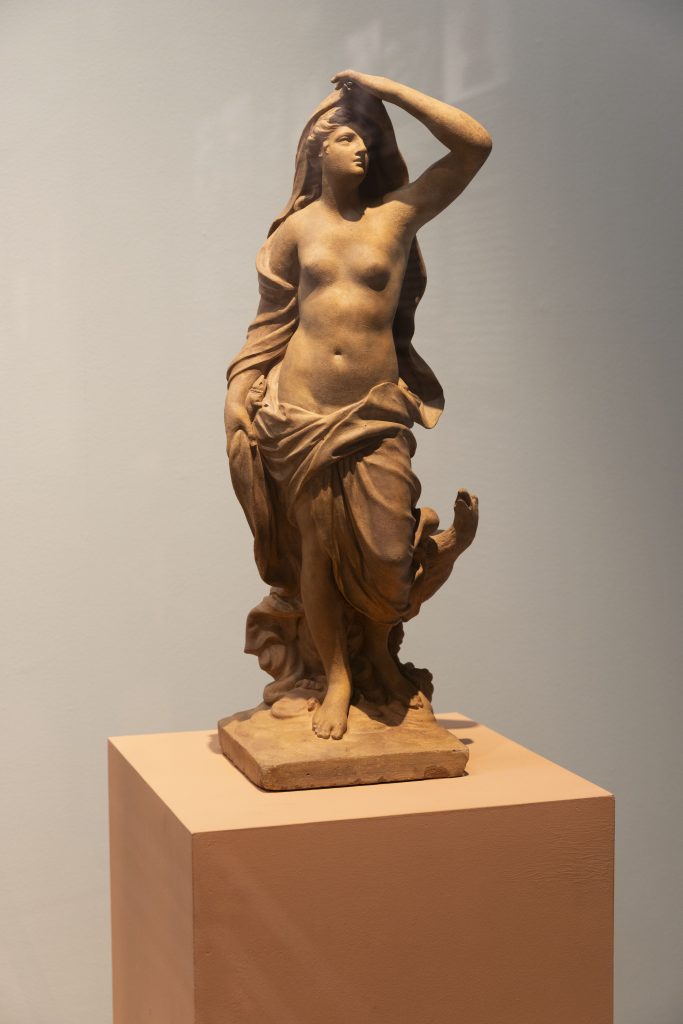
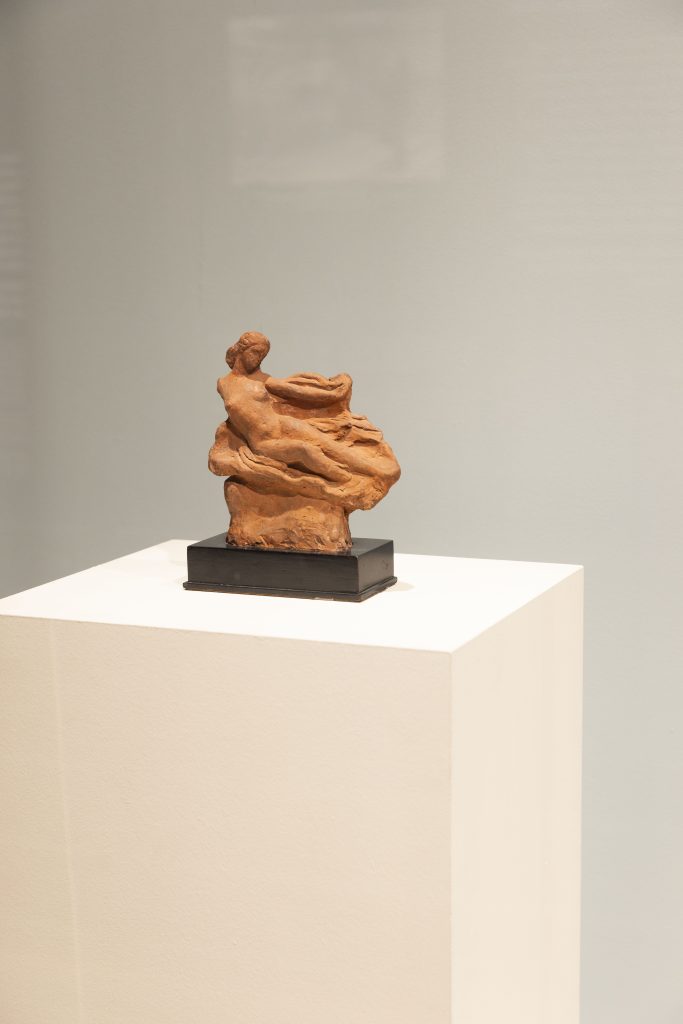
The juxtaposition of these two interpretations of the same theme highlights the modernity of Maillol’s choice, as he abandons traditional symbolic attributes in favor of suggesting a figure suspended in space.
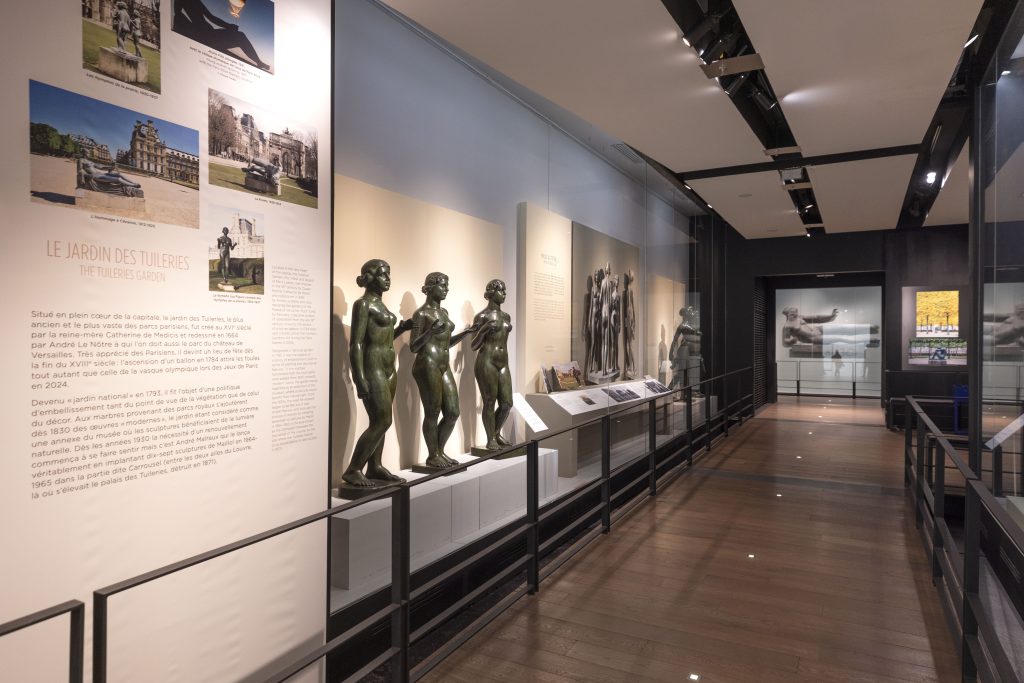
The exhibition concludes with an evocation of the installation of Maillol’s sculptures in the Tuileries Garden in 1965, a decisive moment that marked the public recognition of his work and its lasting presence within the urban landscape.
L’Air : The Biography of a Masterpiece
When Maillol received, in 1938, the commission for a monument intended for the city of Toulouse in tribute to the aviators of the Aéropostale, he did not begin from an entirely new form. Instead, he reworked a plaster cast of the Monument à Cézanne, gradually transforming it through a process he himself described as “marcottage”.
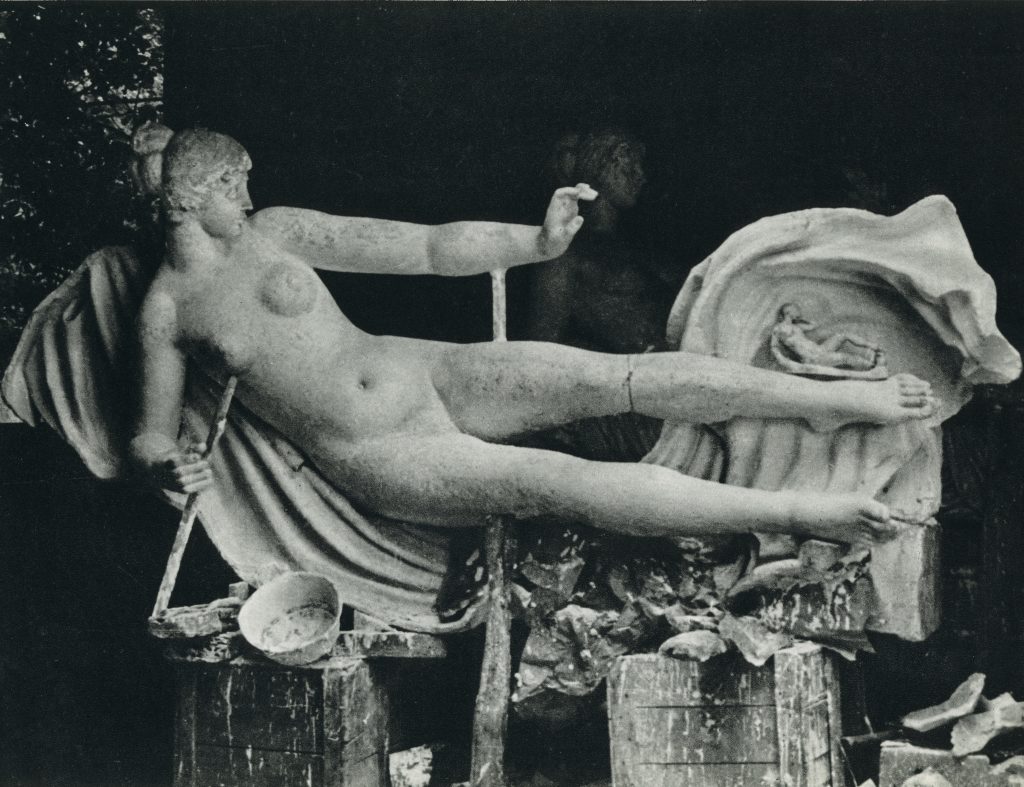
Working from this existing plaster, Maillol cuts, reassembles, and alters the composition: the torso tilts forward, one leg lifts, and the arm separates from the body. Completed in Banyuls in 1939 by the praticien Jean Van Dongen, the stone version could not, however, be installed immediately. Various setbacks delayed its inauguration, and the monument was ultimately installed in the Jardin Royal in Toulouse only in 1948, four years after the artist’s death.
During the final years of his life, Maillol nevertheless continued to develop this figure. He invited Dina Vierny to Banyuls and reworked the large plaster with her: removing the drapery and the structural supports required for the stone version, he developed a figure resting in balance on the hip and leg, now seemingly suspended in space.
This model served as the basis for the various lead casts of L’Air, including the version installed in 1965 at the Carrousel du Louvre, in the Tuileries Garden.